
Google Workspace remains a familiar choice for many businesses thanks to Gmail, Drive, Meet, and very seamless collaboration capabilities. However, not every business finds this toolkit to be the most suitable long-term choice. Some want a stronger Office suite, others prioritize privacy more, and some just need a simpler business email rather than a quite broad ecosystem.
In this article, I only keep paid or commercial options to have a more consistent comparison table. The goal is not to choose a tool that “wins absolutely”, but to point out which solution fits which type of business: needs a strong Office suite, needs more secure email, needs cost optimization, or just needs simple business email service.
Quick overview table
| Tool | Suitable for | Main strength | Points to note |
|---|---|---|---|
| Microsoft 365 | enterprises needing strong Office suite | strong Office ecosystem | may be more complex if only needing email |
| Zoho Workplace | SMBs wanting cost optimization | competitive pricing | less popular than Google/Microsoft |
| Proton for Business | teams prioritizing privacy | strong privacy | not as strong as Google/Microsoft in office suite |
| Fastmail | teams seeing email as core need | good email UX | not a full office suite |
When to look for Google Workspace alternatives
The need usually arises when businesses require more appropriate costs, need a stronger Office suite, prioritize privacy more, or just need simpler business email instead of an overly broad ecosystem.
Microsoft 365
Microsoft 365 is the easiest choice to put on the scale when businesses want to leave Google Workspace but still need a complete set of work tools. Microsoft 365s biggest strength lies in its Office ecosystem, especially if the team is already familiar with Word, Excel, PowerPoint and the working model in traditional enterprise environments.
In practice, Microsoft 365 is more suitable for companies that need both business email, office documents, online meetings, and user management according to a relatively clear structure. If the businesss focus is still on office tools and workflows with many document files, this is a stronger choice than Google Workspace in some situations.
The point to consider is that Microsoft 365 is not always the simplest solution. If a business only needs business email, calendar, and a few basic collaboration features, this suite might be heavier than necessary in terms of both cost and administration.
Zoho Workplace

Zoho Workplace is quite suitable for small and medium businesses that want to optimize costs while still needing a sufficient toolkit for email and basic collaboration. Zohos most obvious strength is competitive pricing compared to the two largest ecosystems in the market, while still maintaining a relatively complete product suite.
Zoho Workplace is suitable when businesses want a practical solution: having email, calendar, storage, teamwork, and some office tools without paying for an overly heavy suite. This is a worthy choice if Google Workspace starts to exceed the cost level that businesses find reasonable.
The point to consider is that Zohos popularity and familiarity level are still lower than Google Workspace and Microsoft 365. This doesnt mean its weak, but it may affect the onboarding experience, internal documentation, and end-user familiarity.
Proton for Business
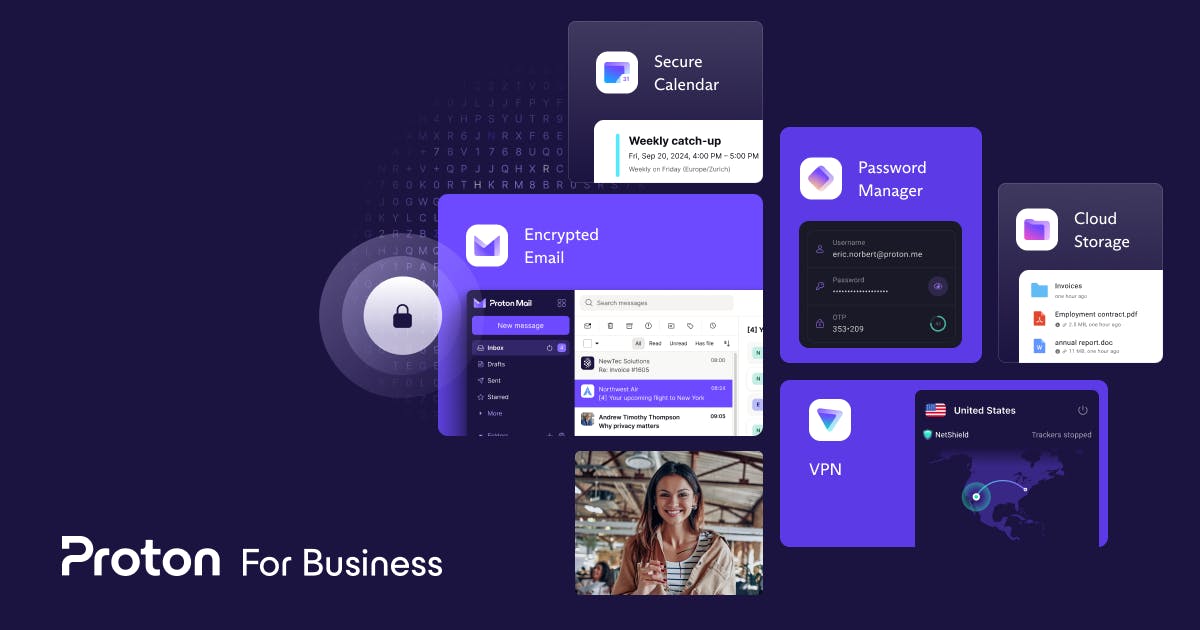
Proton for Business is worth considering when businesses place privacy and security above the normal level. If we view Google Workspace as a strong and convenient collaboration ecosystem, then Proton appeals by going in the direction of email, calendar, and business data with greater emphasis on privacy.
This solution suits teams working with sensitive data, businesses wanting to reduce dependence on advertising ecosystems, or simply prioritizing a provider with a clearer positioning on security. In those cases, Proton for Business has its own standing rather than just being “another choice for email”.
However, if the businesss needs lean heavily toward office suite and real-time document collaboration, Proton is currently not the most direct competitor to Google Workspace or Microsoft 365. In short, this is a choice to consider when privacy is a truly important criterion, not just an additional point.
Fastmail
Fastmail suits businesses that see email as the core need and want a simple, clear, easy-to-use service. This is not an overly broad collaboration ecosystem like Google Workspace, and precisely that becomes a strength in some cases. If businesses dont need a full office suite but just stable business email, Fastmail is a very worthy name to consider.
Fastmails strength lies in email experience and a relatively focused approach. It suits groups working mainly through email, calendar, and contact management, rather than relying heavily on online office documents or more complex collaboration layers.
The point to consider is that Fastmail is not a complete replacement solution for Google Workspace. If businesses need both email, office tools, online meetings, and high-level file sharing, Fastmail will not cover all those needs.
Which tool to choose
- Microsoft 365: suits enterprises needing strong Office suite
- Zoho Workplace: suits SMBs wanting cost optimization
- Proton for Business: suits teams prioritizing privacy
- Fastmail: suits teams seeing email as core need
If businesses need a Google Workspace replacement but still want strong office tools and are familiar with enterprise environments, Microsoft 365 is the most understandable choice. If the goal is cost optimization while maintaining a sufficient ecosystem for email and collaboration, Zoho Workplace is worth putting on the shortlist. If the most important criterion is privacy, Proton for Business has its own advantages. And if the core problem is just stable, easy-to-use business email without needing an overly broad suite, Fastmail is usually the simpler choice.
If businesses mainly need custom domain email instead of a large collaboration suite, you can also refer to Email Hosting as a simpler direction. When needing infrastructure autonomy for accompanying internal systems, AMD Cloud Server will be a more considerable choice than pure SaaS models.
You might also like
- 4 Free and Open Source Zimbra Alternatives Worth Considering
- 4 Free and Open-Source Alternatives to Cloudflare Tunnel Worth Considering
- 4 Free and Open-Source Coolify Alternatives for Self-Hosting Applications
- What is Business Hosting? Guide to Choosing the Right Plan
- Public Cloud vs Private Cloud - The Important Difference
- Top 5 best budget hosting in Vietnam 2026: detailed comparison & benchmarks
About the author

Trần Thắng
Expert at AZDIGI with years of experience in web hosting and system administration.